
SEO tutorials: crawl, quality, and recovery—so GEO can compound
Practical playbooks on algorithm updates, content quality, internal linking, and technical recovery. Strong search engine optimization ensures URLs are discoverable by web crawlers and evaluated coherently in Google Search—so your GEO-ready definitions and evidence sit on pages that are actually indexed and trustworthy to quote.
Topic
Tag Cloud

How to prioritize ecommerce title tag updates at scale
A practical workflow for finding ecommerce pages where title tag changes can earn more clicks—without rewriting the whole catalog or trusting a universal CTR benchmark.

More pages became indexable, yet fewer pages ranked. The funnel explains why.
An ecommerce crawl funnel grew from 1.5M to 2M indexable pages while ranked pages fell from 402K to 383K. Diagnose each gate separately.

One million optimized pages exposed the quality gates that matter at scale
A million-page ecommerce rollout exposed 522,000 missing titles and widespread duplicate H1s. Here is the quality-control system that prevents scale from multiplying defects.

Rankings improved by 12.5 positions. Organic clicks still fell 34%.
An anonymized ecommerce case shows why average position improved by 12.5 places while non-brand clicks fell 34%, and how to diagnose the mismatch.

Nine language sites fell 11%. Five others grew 8%. The global average explained neither.
An anonymized ecommerce analysis found a 19-point performance spread between two language groups. Learn how to diagnose crawl, index, demand, CTR, and AI visibility by market.

Ecommerce crawl budget is an allocation problem, not a volume goal
Find crawl waste from faceted navigation, parameters, duplicate URLs, errors, and weak internal links, then verify fixes with logs and Search Console.

Perplexity Rank Tracker Pricing: How to Judge Cost, Trials, and Fit
A pricing evaluation guide for Perplexity rank trackers. Learn what to check in trials, what pricing signals matter, and how to avoid buying a score without usable evidence.
Free Perplexity Visibility Checker: What It Should Include
Use a free Perplexity visibility check to baseline brand mentions, cited URLs, competitors, and missing answer blocks before buying a paid AI visibility platform.
Best Perplexity Rank Trackers: What to Compare Before You Buy
A practical buyer guide to Perplexity rank trackers: prompt evidence, citation URLs, competitor replacement, pricing caveats, and how Convertos fits into the evaluation.
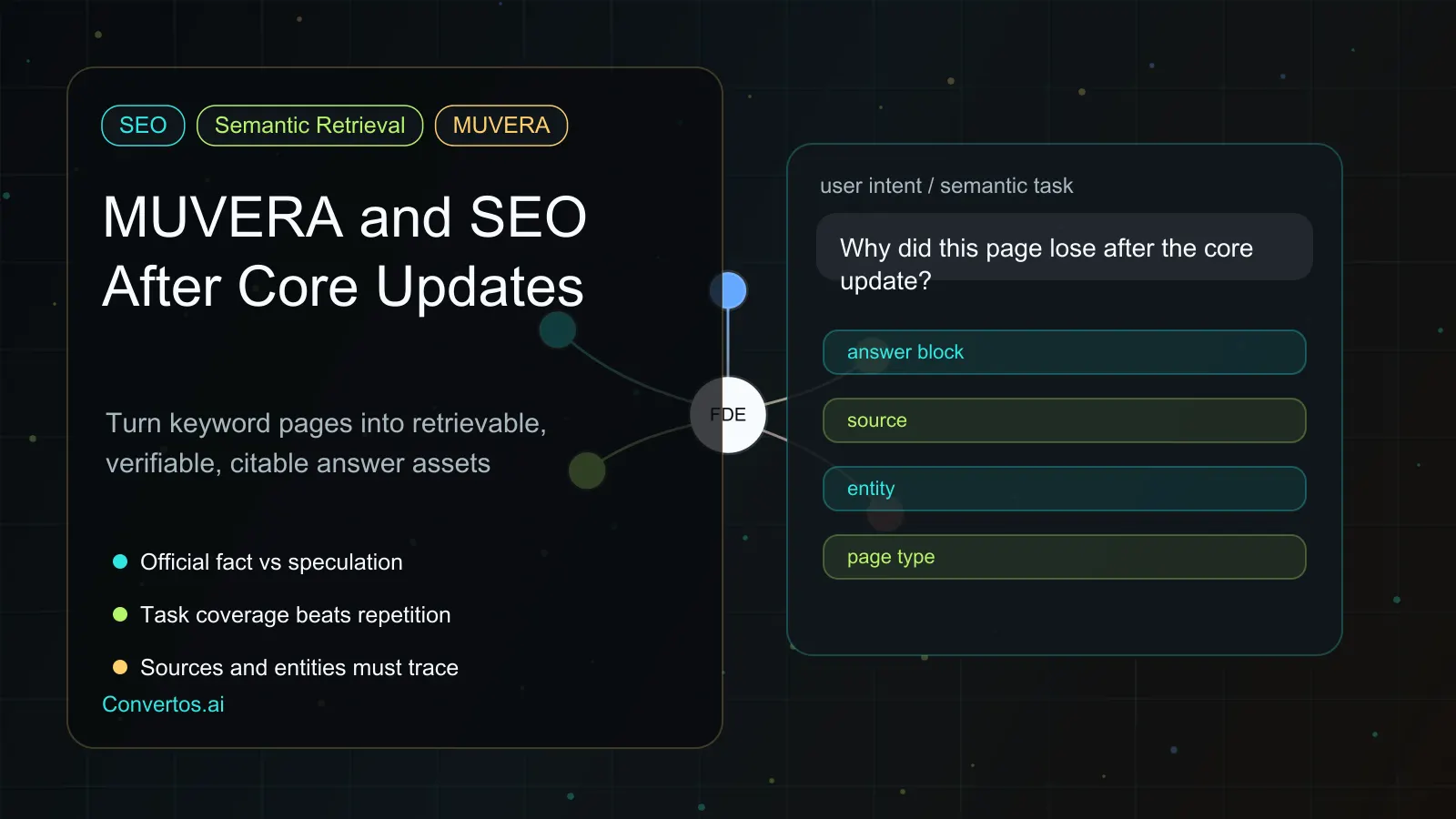
MUVERA and Google’s May 2026 Core Update: What Semantic Retrieval Really Means for SEO
A practical SEO guide to MUVERA and semantic retrieval after Google’s May 2026 core update, with evidence boundaries, a ContentValue heuristic, and an audit checklist.
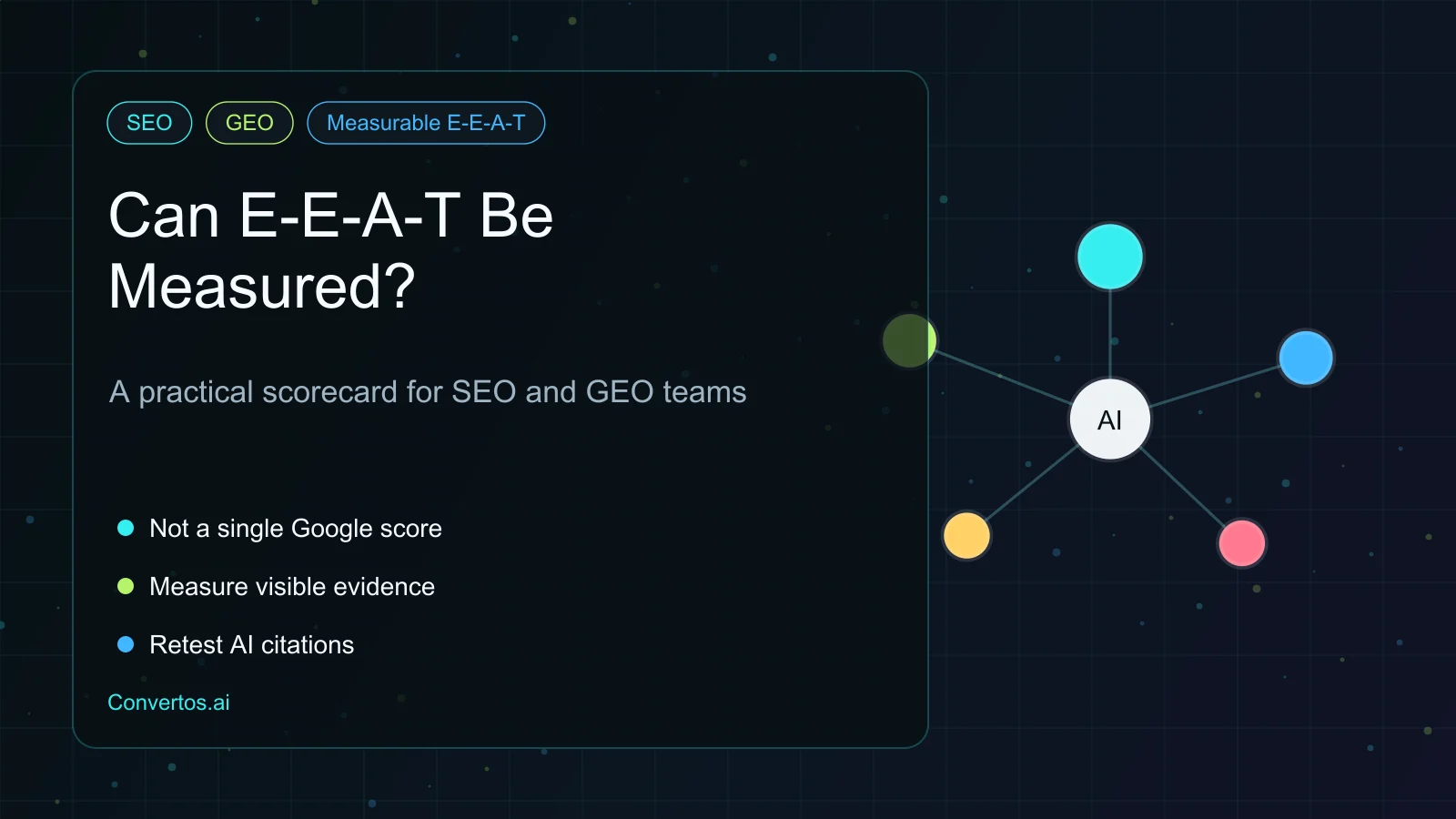
Can E-E-A-T Be Measured? A Practical SEO and GEO Scorecard
A practical SEO and GEO guide to measuring E-E-A-T with cautious, source-backed proxy metrics: semantic completeness, entity coverage, sourcing, schema, and AI citation monitoring.
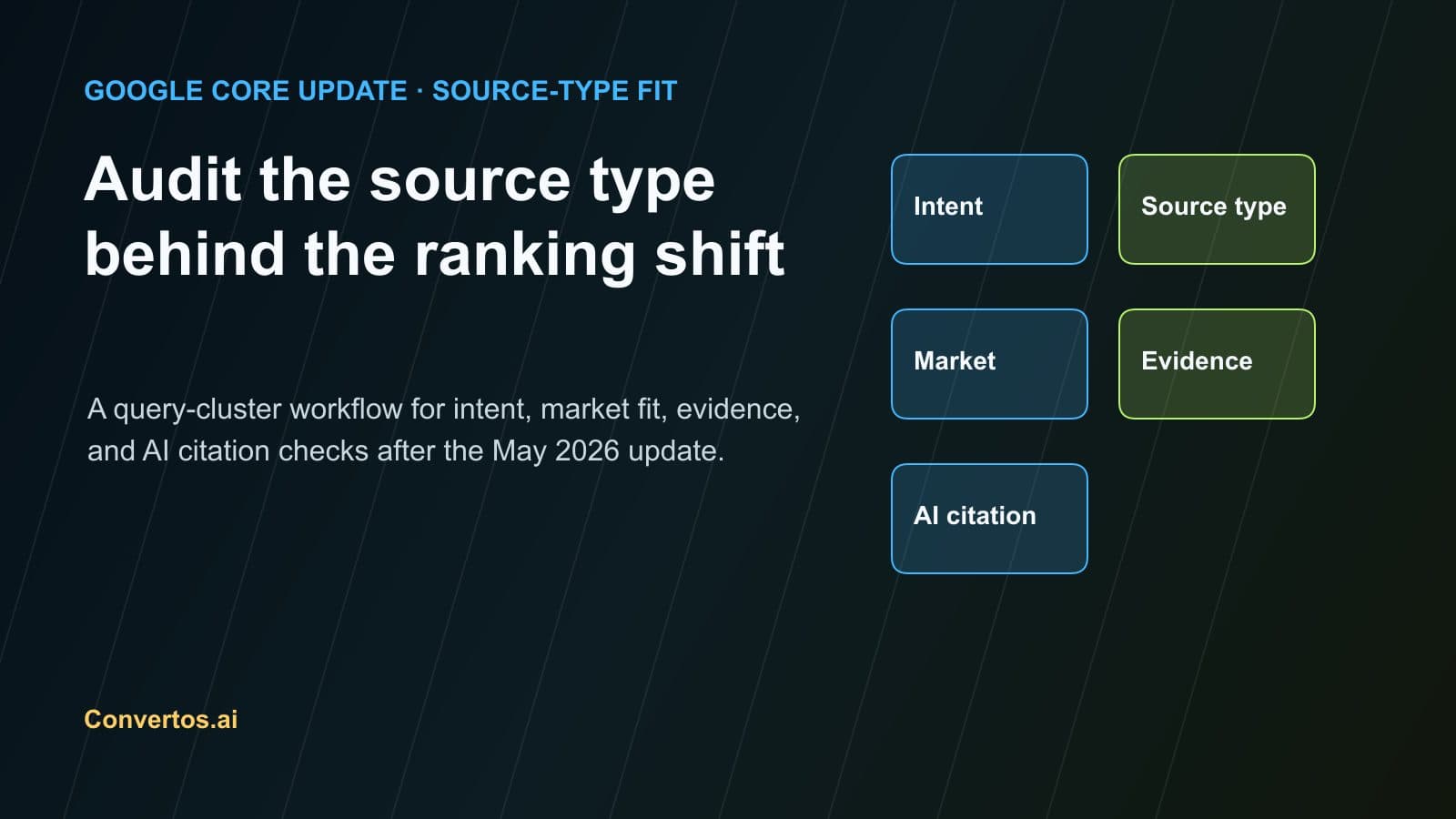
Google May 2026 Core Update: A Source-Type Fit Audit for SEO and AI Visibility
A practical response to the May 2026 Google core update: audit source-type fit, market fit, cited sources, and AI visibility with a scorecard and workflow.
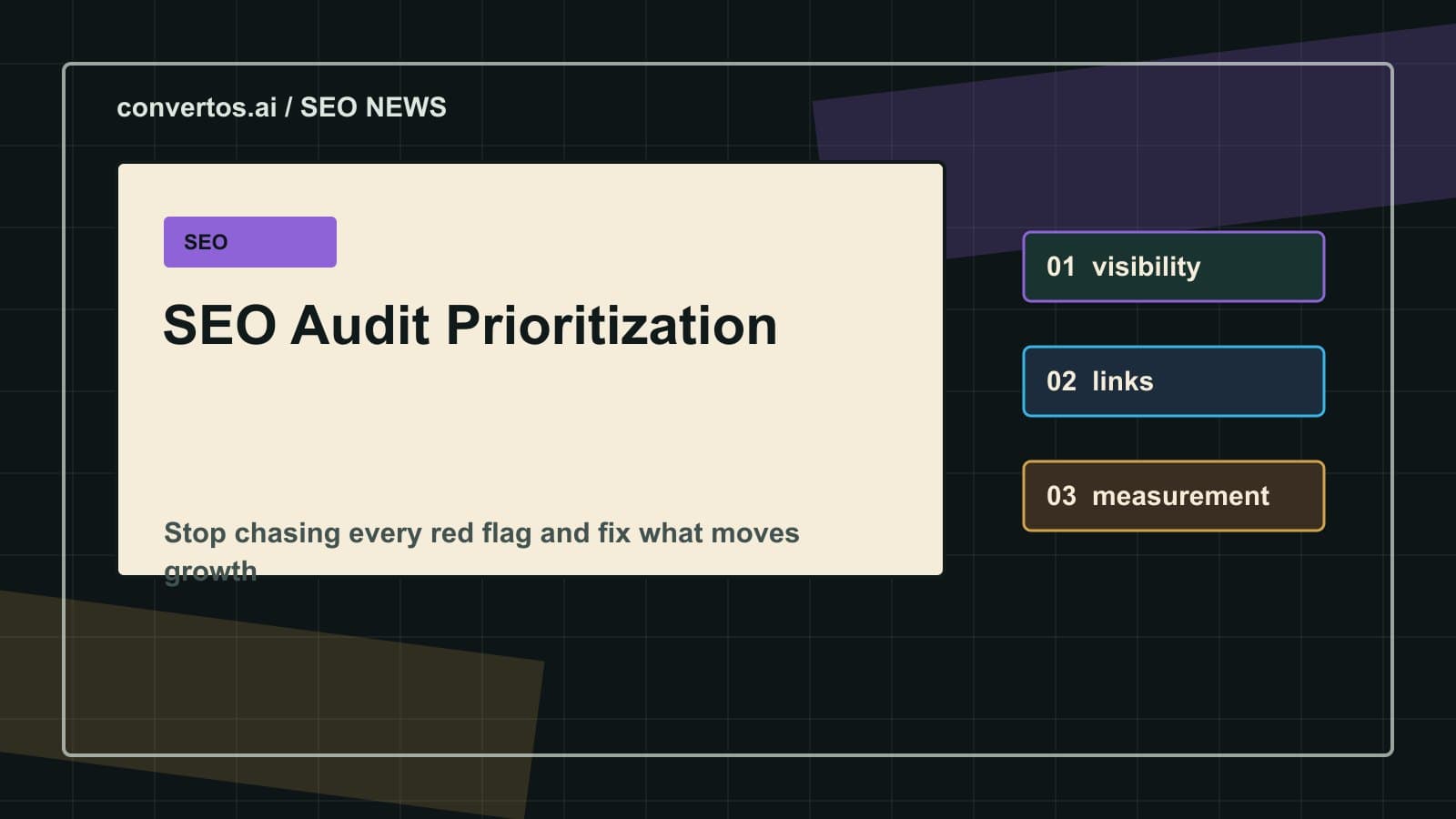
“Fix Everything” Is the Wrong SEO Strategy: How to Prioritize Audit Issues
SEO audit tools flag hundreds of issues, but not every warning deserves engineering time. Learn a business-first prioritization model for technical SEO fixes.
Google Merchant Listing SEO: Product Schema, Merchant Center Feed, and Free Listings
A practical Google Merchant SEO guide for ecommerce and marketplace teams: Product + Offer schema, Merchant Center feed rules, Free Listings, variants, shipping, returns, and rollout priorities.
Generative Engine Optimization vs Answer Engine Optimization vs SEO
A clear comparison of GEO, AEO, and SEO for AI visibility: what each term means, where they overlap, what teams should measure, and how to avoid jargon.
Google AI Overview Visibility Tool: How to Measure and Improve It
Google AI Overview visibility tool checklist: measure eligibility with Search Console generative AI reports, compare manual checks vs monitoring workflows, and improve supporting links.
AI Search Visibility Tool: What It Measures and What It Misses
Learn what AI search visibility tools measure, including mentions, citations, prompt coverage, competitors, answer accuracy, source domains, and what they still cannot prove.
AI Brand Visibility Tracking: Metrics, Dashboard, and Workflow
A practical AI brand visibility tracking workflow: prompt sets, mention tracking, citation review, answer accuracy, competitor gaps, dashboard fields, and monthly review cadence.
AI Visibility Tools: Best Options and Buyer Checklist
Compare AI visibility tools for SEO and GEO teams. See what Semrush, Profound, Scrunch, OtterlyAI, Peec AI, SE Visible, and Convertos.ai are best for, what they miss, and how to choose.
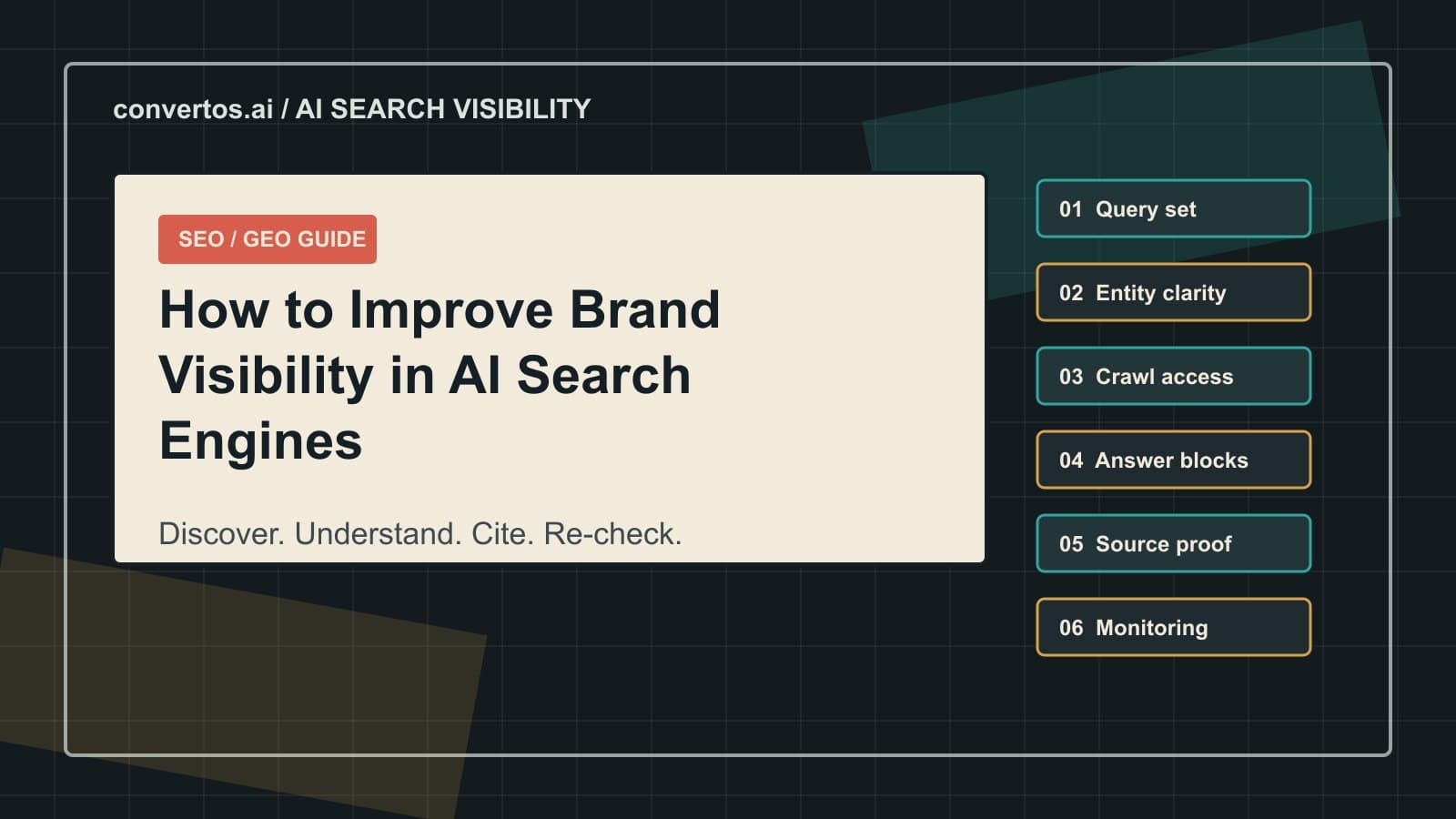
How to Improve Brand Visibility in AI Search Engines (2026 Guide)
How to improve brand visibility in AI search engines: define prompts, clarify entities, make pages crawlable, build answer blocks, earn proof, and track citations across Google, ChatGPT, Perplexity, and Bing.
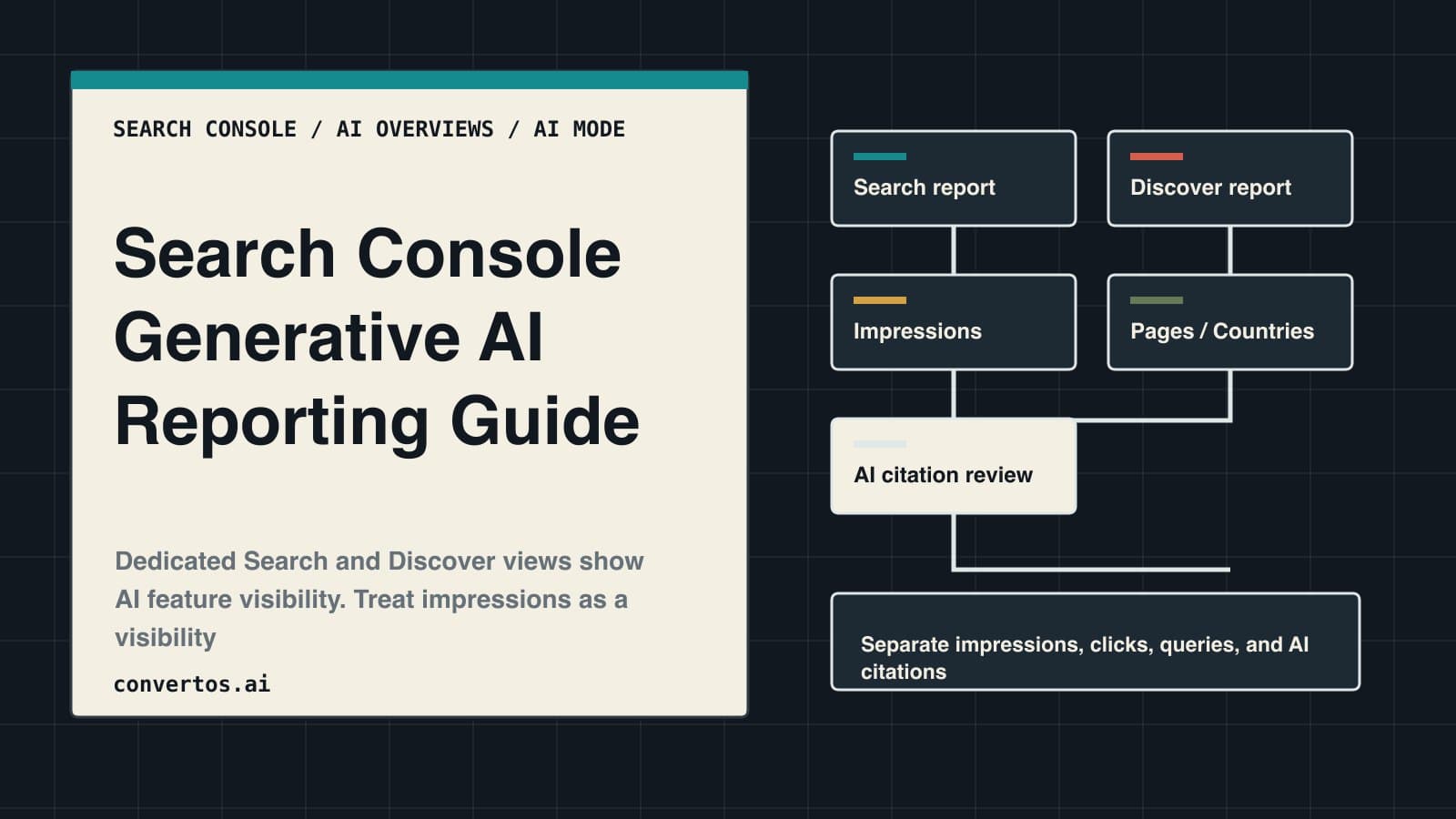
Google Search Console Generative AI Performance Reports: What SEOs Should Track
Read Google Search Console generative AI reports without overstating rollout, attribution, clicks, or cross-platform visibility.
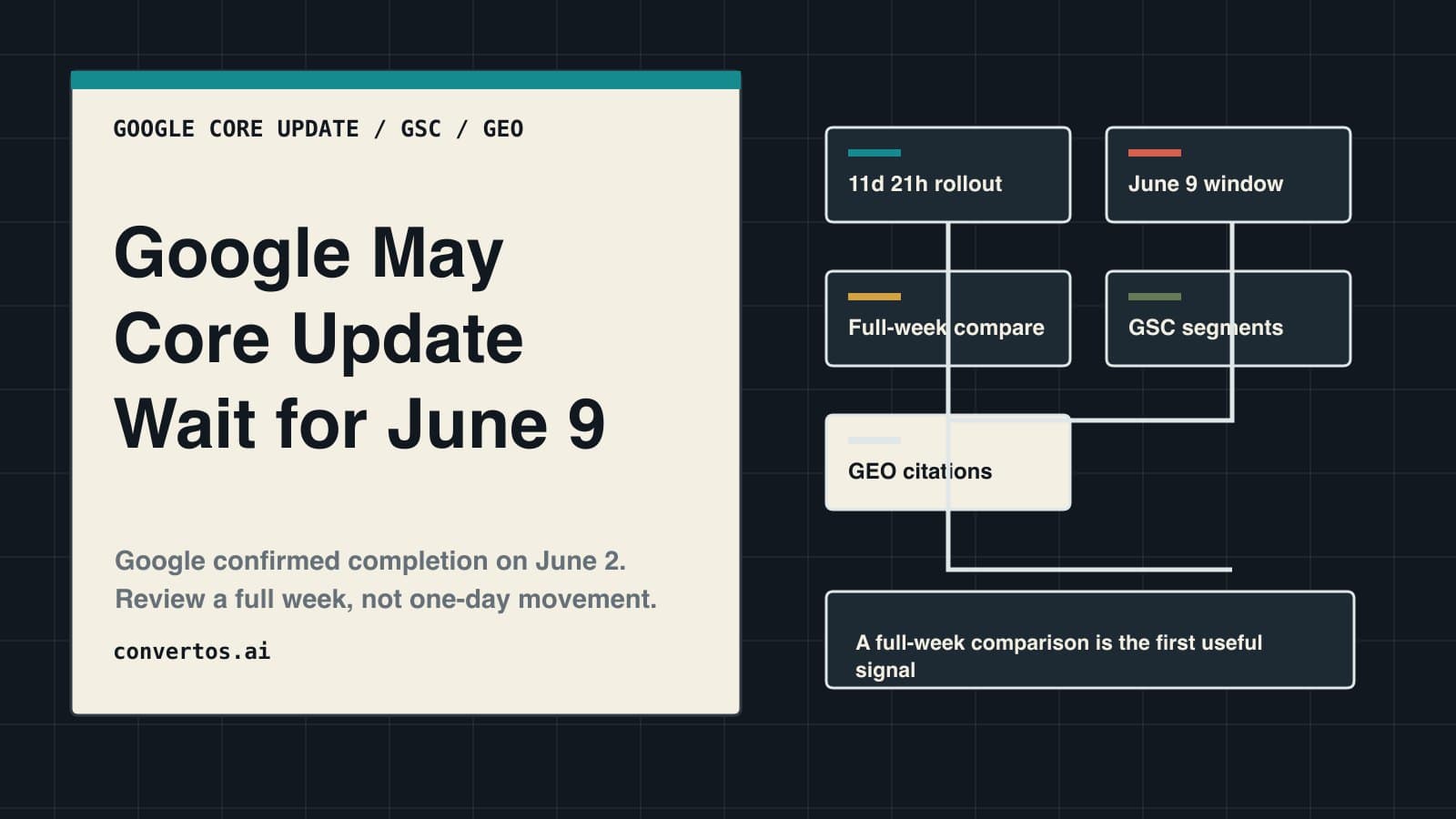
Google May 2026 Core Update Complete: Wait for June 9
Google’s May 2026 core update ended June 2. Here’s the official timeline, why one-day data is risky, and how to analyze GSC and AI search after June 9.
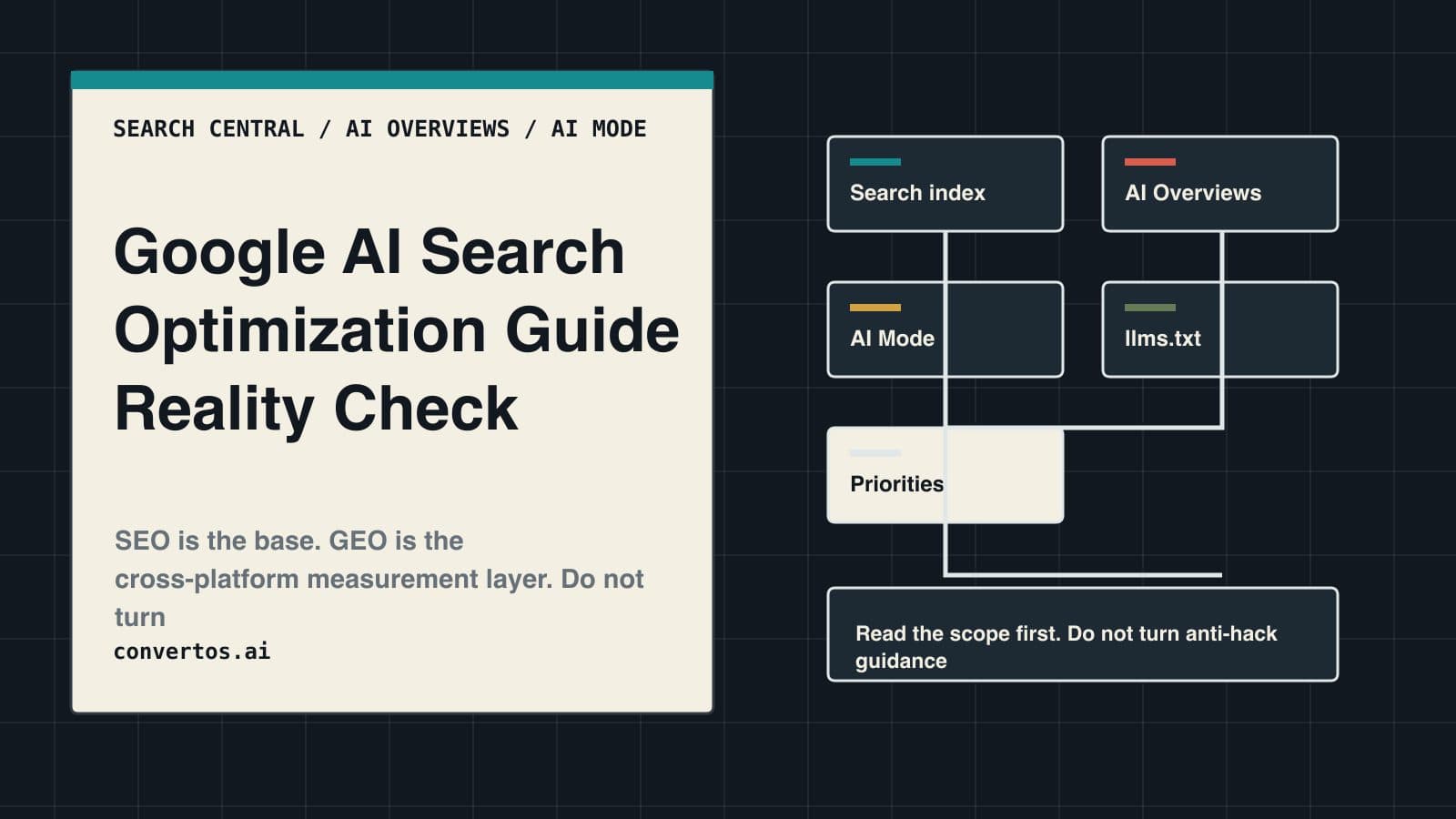
Google’s 2026 Generative AI Search Guide: What Actually Changes
A practical reading of Google’s May 2026 guide to generative AI features in Search: AI Overviews, AI Mode, AEO/GEO, llms.txt, and execution priorities.
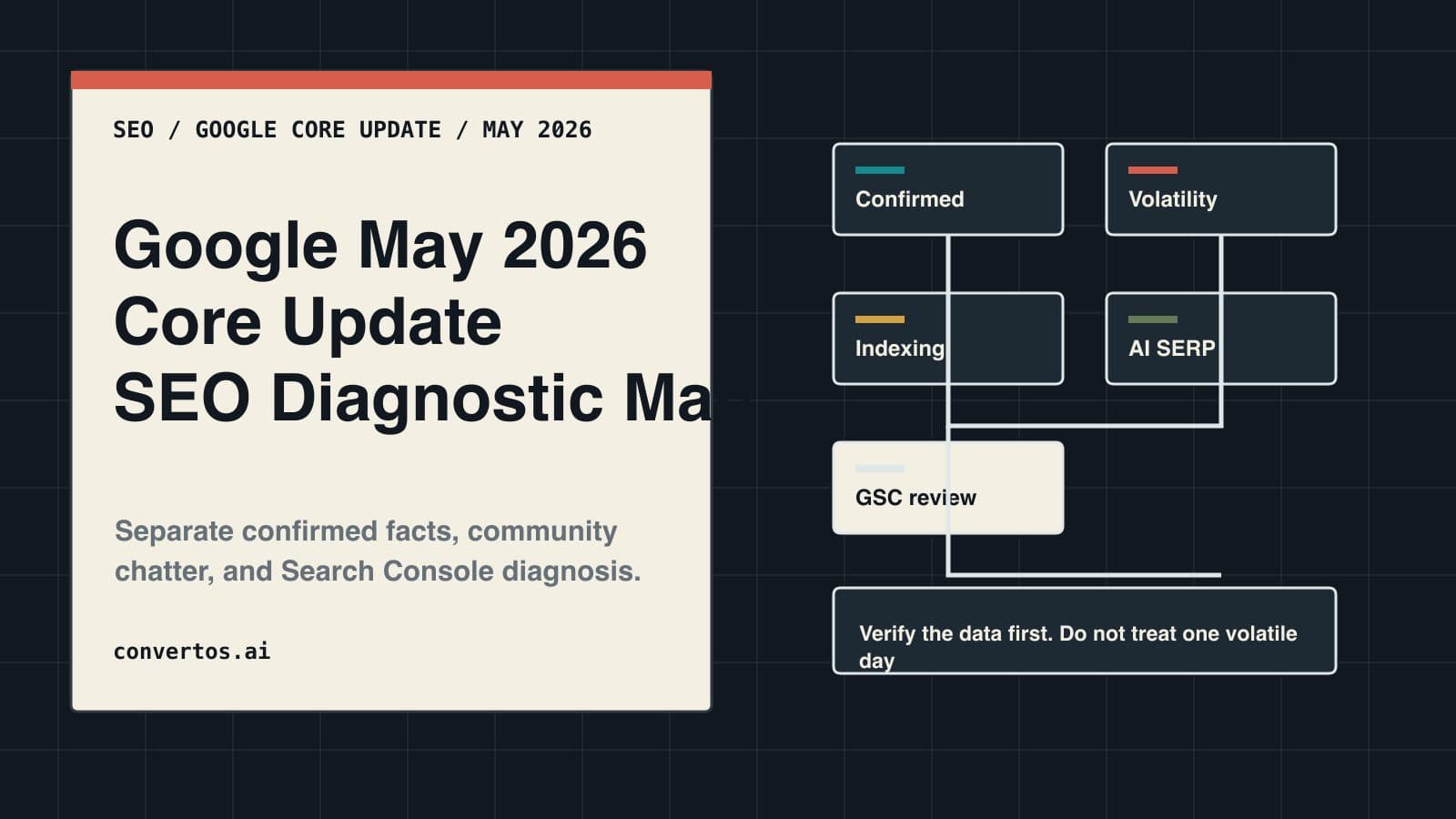
Google May 2026 Core Update: What SEOs Are Discussing and What to Check
Google’s May 2026 core update began on May 21, 2026. This guide separates confirmed facts, SEO community chatter, AI Search variables, and a Search Console workflow.
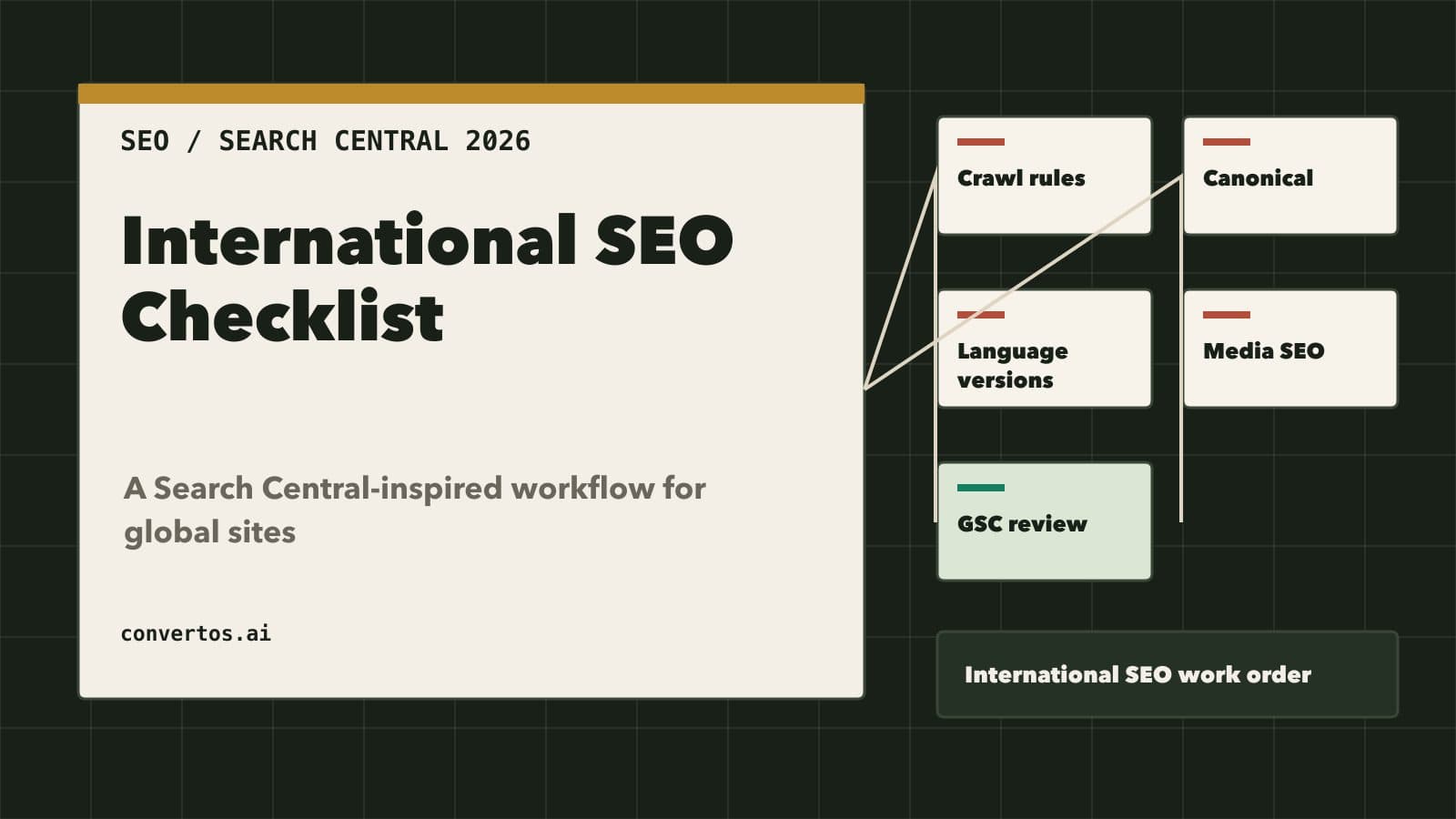
Search Central International SEO Checklist for Global Sites
A practical international SEO checklist based on Google Search Central resources, current SERP research, and multilingual site guidance.
SEO: SEO Trend Tracking and Search Impact
Track SEO as an ongoing SEO trend, including new sources, platform discussions, timeline updates, search impact, and practical actions. Current source trail: 5 source signals.
Schema: Weekly SEO Hotspot Summary
Schema entered the SEO hotspot pool with a heat score of 42 and 3 source signals. This page summarizes source evidence, SERP intent, and SEO/GEO impact.
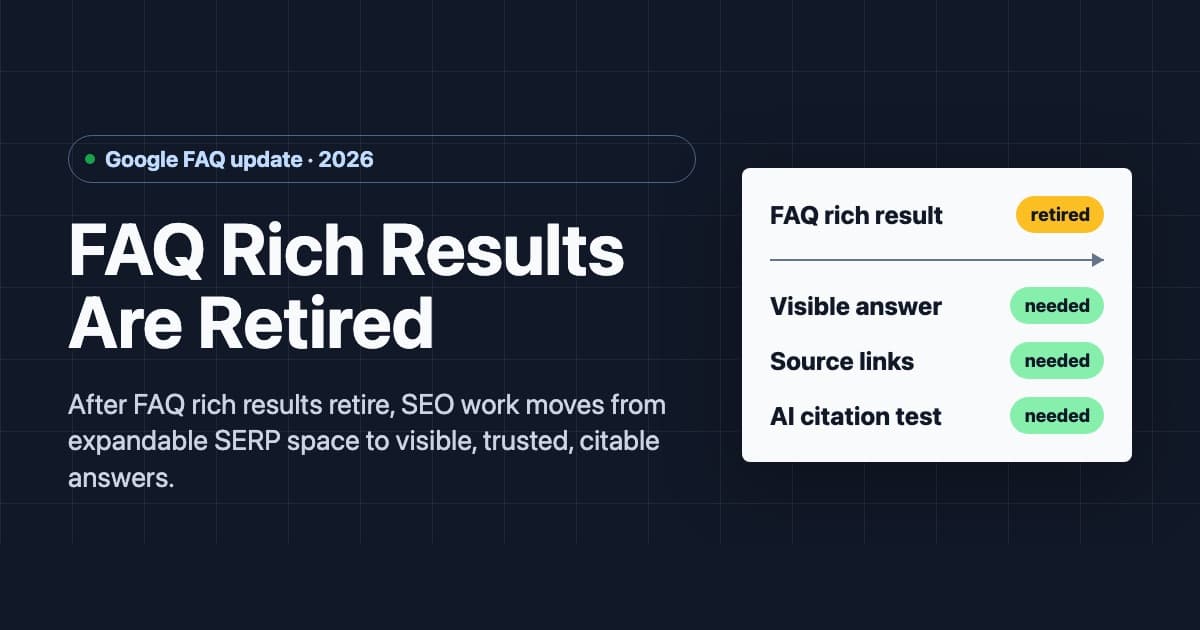
Google FAQ Rich Results Are Gone: What SEO Teams Should Do
Google FAQ rich results stopped appearing in Search on May 7, 2026. Learn what changed, what to keep, and how to rebuild FAQ content.
Google April 30, 2026 Update Explained: Preferred Sources, Not a Core Update
Implement Google Preferred Sources correctly with the official button code, eligibility rules, screenshots, placement guidance, and measurement limits.
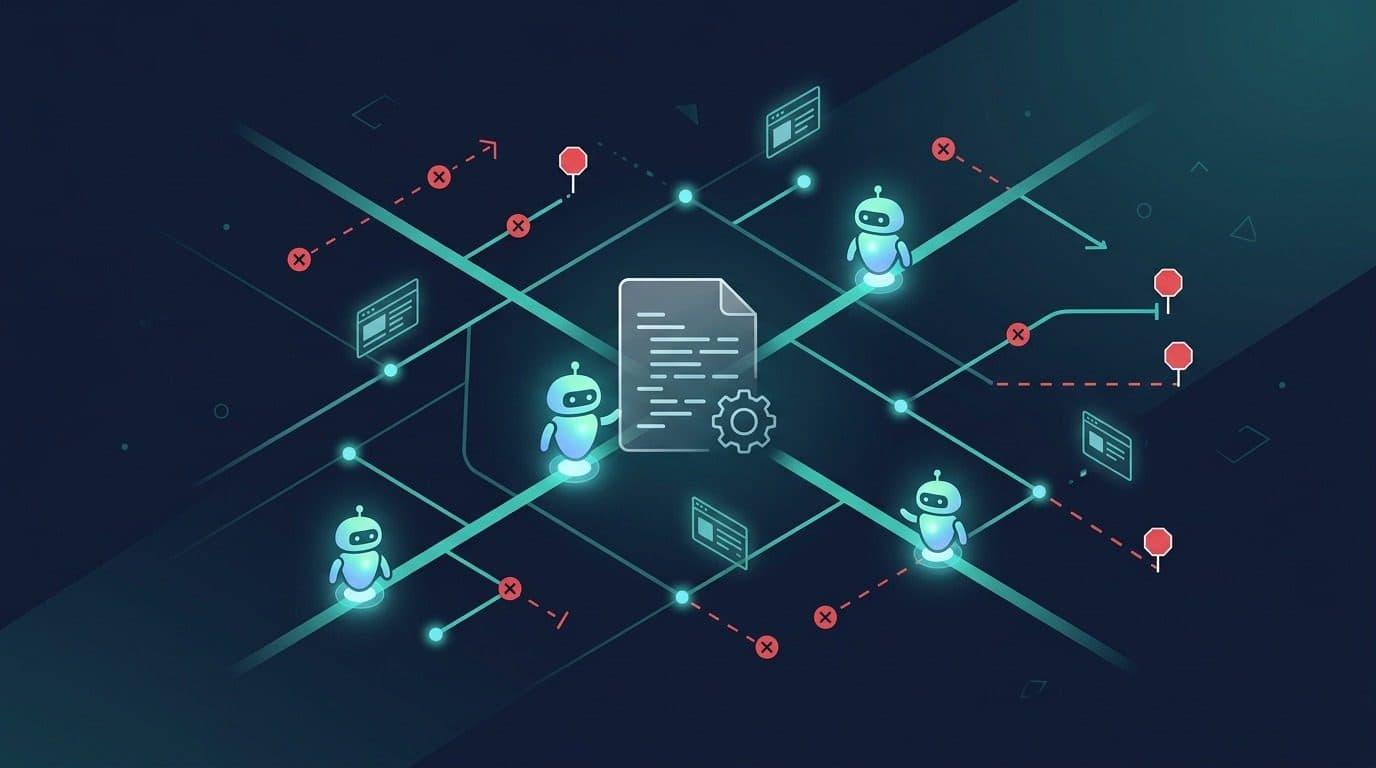
robots.txt Tutorial 2026 Write Test Deploy
1. What is robots.txt robots.txt is a plain-text rules […]
FAQ
Do I still need traditional SEO if I only care about ChatGPT or Perplexity?▼
Yes. These systems still pull from the open web. If your site has crawl issues, thin templates, or unclear semantics, citation quality drops fast. SEO fixes the foundation; GEO improves what gets quoted.
What is the minimum SEO baseline before scaling GEO content?▼
Keep URLs and HTTP responses stable on pages you want cited, keep one primary intent per URL, and align title with H1 clearly. Use structured data to remove ambiguity, not just to decorate marketing copy.
Should I put FAQ schema on every page?▼
Only if the page truly answers distinct user questions. Repetitive or keyword-stuffed FAQ markup can backfire. Real Q&A that matches page content works better.
How do internal links help GEO?▼
They guide crawlers and retrieval systems to your canonical answer pages, reinforce question phrasing, and reduce duplicate URLs competing for the same intent.
How is this different from “writing for AI”?▼
We optimize for machine-readable claims and evidence, not buzzwords. The toolkit scores paragraphs with transparent rules, and full audits extend that to real URLs plus technical context.