
Answer engines
Measure each engine separately instead of averaging different behaviors.
AI search monitoring buyer guide
Monitor AI answers, then turn the evidence into page fixes.
AI search monitoring is the recurring process of checking how ChatGPT, Perplexity, Gemini, Google AI, and other answer engines mention, cite, compare, and recommend brands. A useful AI search monitoring tool keeps prompts, answer evidence, sources, competitors, trend reporting, and page-level fixes in one workflow.
Captured answer excerpt · original language
For most creative work, I’d recommend a MacBook Pro 14-inch if you want the best all-around mix of display quality, performance, and battery life, or an ASUS ProArt P16 if you prefer Windows and want strong ports and a color-accurate OLED screen.
5 citation links in this answer; first 2 shown:
A monitoring platform spans answer surfaces. A one-time checker only answers how things look now.


Measure each engine separately instead of averaging different behaviors.
Keep prompt, answer, source, screenshot, and run date together.
Turn weak answers into content, schema, and internal-link updates.
Start with a snapshot of your brand. To compare changes over time, keep the same questions, market, and model for each recheck.
Are we mentioned now
Which sources are cited
Where competitors win
What to fix first
Which prompts stay tracked
Whether releases moved signals
Which competitors keep winning
Which pages own the fixes
Skip the pretty score. Look for engine coverage, evidence, measurement discipline, trend reporting, rechecks, and page-level execution.
ChatGPT, Perplexity, Gemini, Google AI Overviews, and market/language variants are measured as separate surfaces.
A brand can win one answer surface and disappear from another.
Prompts are grouped by buyer task, not copied from keyword lists.
AI answers react to task language, comparison language, and constraints.
Every finding stores the answer, screenshot, cited URLs, competitors, and run timestamp.
SEO, content, and leadership need the same auditable record.
Brand mentions, owned-page citations, and third-party citations are scored separately.
Being named is weaker than being used as evidence.
The system flags prompts where competitors are recommended and your brand is absent or weak.
Those are the answer moments that can steal demand before a search click.
Findings map back to specific pages, blocks, schema, and internal links.
Monitoring is only useful when a page owner knows what to ship next.
The same prompt set is rerun after updates, with trend reporting notes on what changed.
AI visibility needs trend evidence, not one dramatic screenshot.
This cadence works weekly or biweekly. The point is not more runs. The point is page work after each run.
Start with commercial questions, comparison prompts, pain-led prompts, and implementation questions.
Capture model output in fixed windows so the team can compare like with like.
Separate mention, citation, recommendation, competitor, and answer-quality signals.
Connect each weak prompt to a page, evidence block, schema issue, or missing internal link.
After publishing, rerun the same prompts and write a short note on what moved.
Mention rate is the entry point. Useful decisions come from citation, recommendation, competitor, and framing signals.
How often answers name your brand for tracked prompts.
How often your own pages appear as cited evidence.
How often the answer actively recommends your brand.
Prompts where competitors appear and your brand does not.
Which sources the answer engine keeps returning to.
Whether the brand is framed as leader, niche option, risky choice, or alternative.
A credible platform page has to show evidence quality, not just say that monitoring exists.
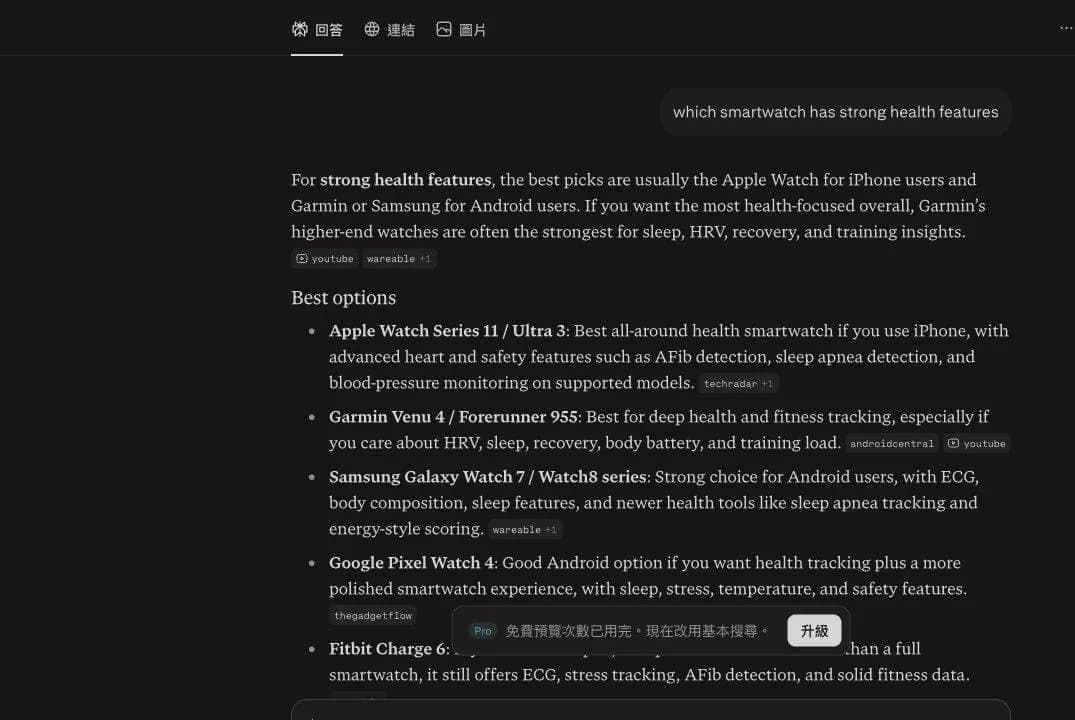
A buyer-style prompt returns recommendations, source chips, and competing brand context.
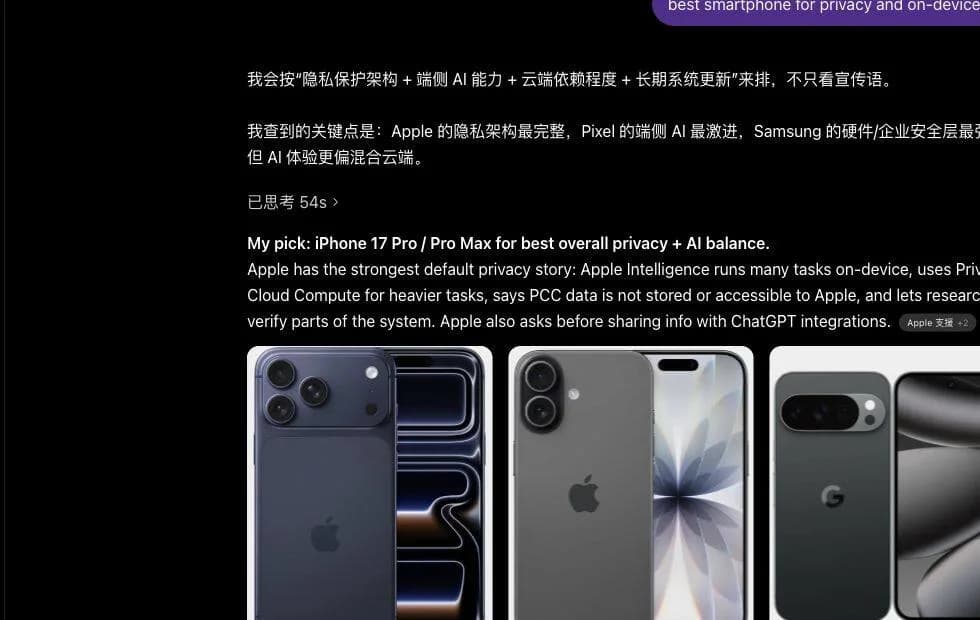
Useful for separating a casual brand mention from a recommendation that may influence choice.
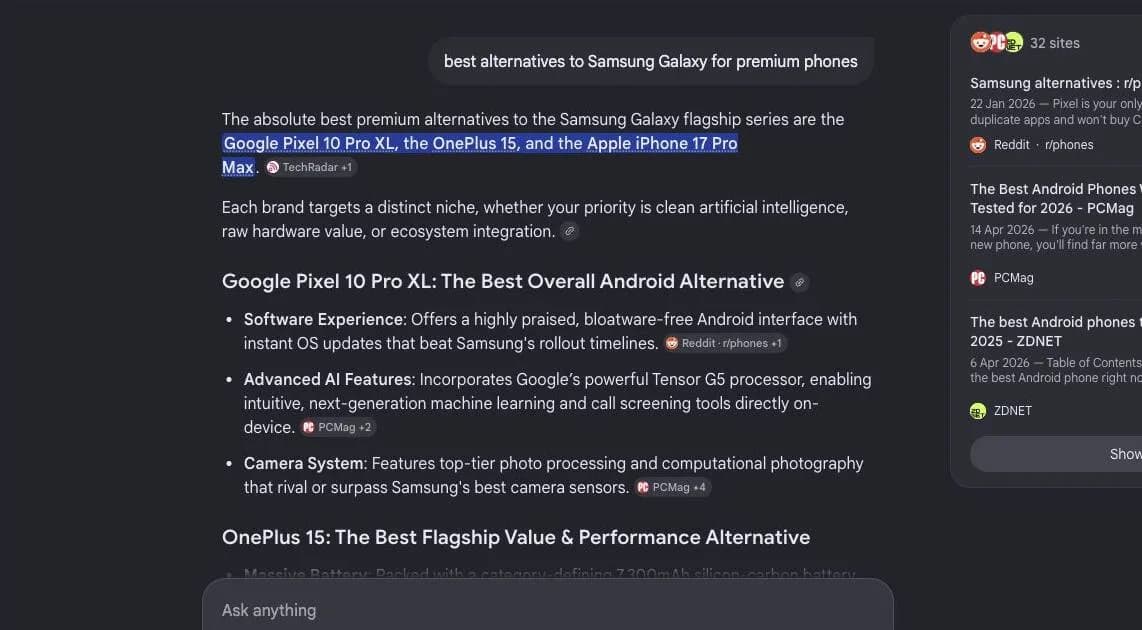
Captures where alternatives appear and which sources support the answer.
This is not a pretty report for one person. It gives SEO, content, brand, and GTM the same evidence.
Find answer gaps that rank tracking cannot explain.
Choose pages that need definitions, proof blocks, comparison tables, or fresher sources.
Watch how AI systems describe category fit, strengths, limits, and alternatives.
See competitor recommendations before buyers reach a form or sales call.
Trust does not come from a long author box. It comes from findings a team can review, explain, and measure again.
The prompt set, market, language, and run window stay visible.
A person checks claims before a finding becomes a recommended action.
Advice lands on a URL, a content block, or a schema field.
Each release has a short note that explains what was expected to move.
These branded queries show buyers are mapping the category. A useful page explains where each reference fits instead of flattening every tool into one score.
Adobe LLM Optimizer gives enterprise teams a way to measure and improve brand visibility in AI-generated answers. When buyers search for Adobe GEO tools, compare it against engine coverage, evidence capture, and page-level fix workflows rather than brand familiarity alone.
View official sourceSimilarweb 2026 reportThe Similarweb 2026 Generative AI Brand Visibility Index PDF/report is useful for category benchmarks, share-of-voice language, and executive context. It does not replace prompt-level evidence, citation tracking, and remeasurement for your own pages.
View official sourceSimilarweb Gen-AI intelligence suiteSimilarweb AI Search Intelligence can support GEO by showing how brands and competitors appear across AI search surfaces. Pair that market view with owned-source checks, page recommendations, and recurring prompt runs.
View official sourceAdd your brand and website, choose the questions, and review the cost before submitting. Use that snapshot as the baseline for later checks.
Set up a brand checkAI search monitoring is the recurring process of checking how AI answer engines mention, cite, compare, and recommend a brand across a fixed set of buyer-intent prompts.
It is a system for checking how AI answer engines mention, cite, compare, and recommend brands across repeated buyer-intent prompts.
Use an AI search visibility monitor that repeats the same buyer prompts, saves answer evidence, tracks citations and competitors, and connects weak prompts to page fixes.
A checker gives the first baseline. A monitoring platform keeps the prompt library, recurring runs, evidence records, competitor gaps, and recheck cycle.
An AI search monitoring dashboard is the workspace that shows tracked prompts, answer evidence, brand mentions, cited pages, competitor-only answers, trends, and assigned page fixes so teams can see what moved after each release.
Look for engine coverage across ChatGPT, Perplexity, Gemini, and Google AI Overviews; buyer-intent prompt libraries; answer and screenshot evidence; citation analysis; competitor-only answer detection; trend reporting; and page-level recommendations that improve the next run.
Citation share, recommendation share, competitor-only answers, source reuse, answer framing, and post-release movement matter because they point to work a team can do.
Use Adobe LLM Optimizer and Similarweb AI Search Intelligence as category references, then evaluate whether each workflow gives prompt-level evidence, citations, competitor context, and page recommendations your team can actually ship.
A generative search console is the emerging name teams use for a dashboard that combines Google Search Console-style query evidence with AI answer monitoring: prompts, mentions, citations, competitors, pages, and post-release rechecks.
No. The practical goal is to improve source clarity, proof quality, and measurable visibility trends over time.
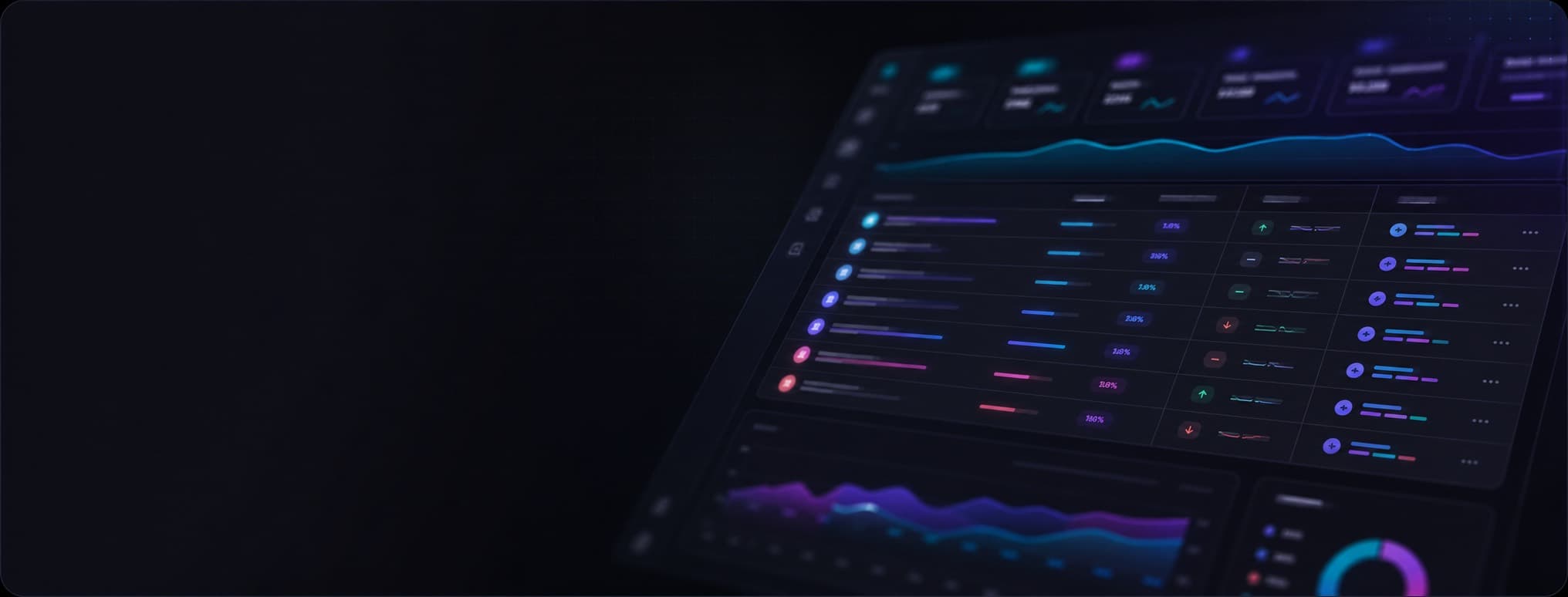
The first snapshot finds mention, citation, and competitor gaps. High-value prompts become the long-term set.
Run baseline snapshot